

Deep in the interior of Papua (formerly known as Irian Jaya), a remote village lies nestled in the mountain range, accessible only by foot or plane. A network of rugged jungle trails allows villagers to trek from one village to another, often requiring arduous multi-day journeys. Reaching other destinations necessitates travel by bush plane.

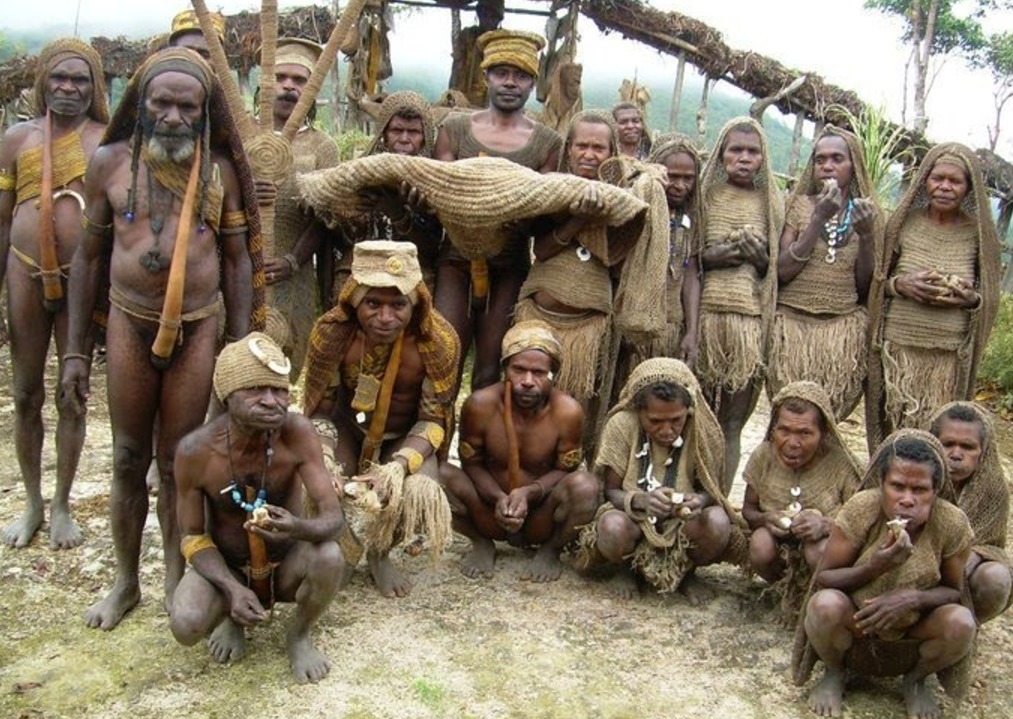
_“Paniai Regency is one of the oldest regencies in the Meepago region, which has since been divided into three additional regencies: Intan Jaya, Deiyai, and Dogiyai in Papua Province. In Paniai, two major tribes coexist, each with distinct cultures. These are the Moni and Mee tribes. Despite their cultural differences, the two tribes maintain close kinship ties.
The Moni Tribe has unique traditions and customs compared to the Mee Tribe. Four main clans of the Moni Tribe—Zonggonau, Kobogau, Yatipai, and Dimbau—reside in Paniai. Originally from Intan Jaya Regency, these clans moved to Paniai due to inter-clan warfare in the past. To protect themselves, some members fled their native villages and settled in Paniai, where they became part of the Mee Tribe while preserving their original clan identities.
Historically, the Moni and Mee tribes engaged in tribal warfare to defend their territories and communities. These conflicts caused casualties on both sides and left a significant impact. According to legends passed down through generations, the tribes eventually made a peace agreement to end the disputes. They resolved territorial issues traditionally, dividing mountains and rivers between the two tribes. The Moni Tribe retained the right to areas they passed through, with the agreement that they would avoid causing harm in those regions.
In their communal lives, both tribes have tribal chiefs who lead their communities. A chief is chosen based on their nurturing spirit, leadership skills, and wealth, including pigs and extensive land ownership. Chiefs are also expected to resolve conflicts and disputes effectively.
While the tribes have different cultures, languages, and traditions, they maintain close kinship ties through mutual respect and collaboration, particularly in decision-making processes that affect public interests.
The Moni Tribe has a distinct approach to conflict resolution. When disputes arise and cannot be resolved, women take on the responsibility of finding a solution. This tradition has been preserved over generations and continues today. The Mee Tribe, on the other hand, has a unique linguistic feature, as each of its clans speaks different languages. In the eastern region, the language is called Koha, while the western region uses Koya. Despite these differences, the Moni Tribe can understand both dialects. However, the Mee Tribe struggles to comprehend the Moni language, which makes them cautious when communicating in public.
The Moni Tribe is a minority in areas dominated by the Mee Tribe. Despite limited attention from the Paniai government, the Moni Tribe sustains their livelihoods, preserving their culture and traditions. They defend their rights while developing local potential through farming, cattle raising, and utilizing forest resources like rattan and orchids.”_ (@econusa)

Day Overview
Day 1
Arrival in Jayapura/Timika or Manokwari – connect to Nabire. Half-day adventure in Nabire. Trek to Niagara Bihewa and return to the hotel by noon. (Lunch, Dinner)
Day 2
Trek to Deiai village to visit Moni tribal communities.
Day 3
Stay with the Moni Tribe and participate in traditional steaming cooking processes.
Day 4
Engage in fishing activities and learn traditional salt-making techniques.
Day 5
Return to Nabire.
Day 6
Transfer to Dekai Ataruri Airport-Nabire and fly to Jayapura. Same-day connection to Wamena, Bali, or Sorong.
Book your dream adventure with Trek-Papua today and unlock a world of wonder.
Our knowledgeable guides and personalized itineraries ensure an unforgettable journey.
Get in Touch us via e-mail: trekpapua@gmail.com Or Leave a Message on WhatsApp number +62 812-47628708
Follow us on Instagram @trek_papua | Facebook @trekpapuatour | Youtube @trekpapua
 Trek-Papua